
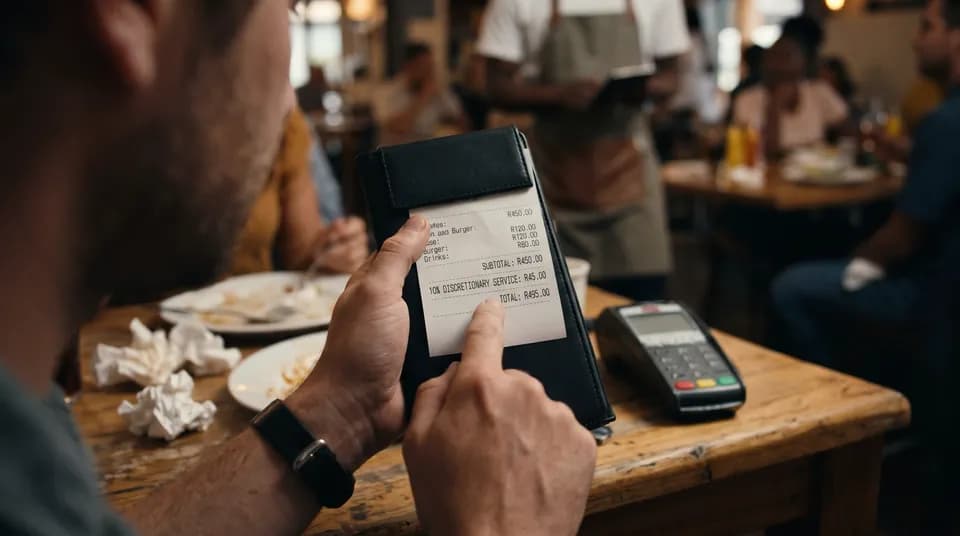
You finish a good meal, ask for the bill and look for the bottom line. You add your tip on top, the way most South Africans do and pay. Later at home, you look again. There it is a few lines up: a 10% "discretionary" service charge you never agreed to. You've just tipped twice and the second time nobody asked.
That practice has now been called what it is. This month a popular Pretoria restaurant has been found guilty of prohibited conduct for automatically adding a 10% service charge to customers' bills. Its menu said "a discretionary charge of 10% will be added to your bill. Please notify management if the service you received is not up to standard. Management will gladly remove it from your bill." The tribunal said that isn't good enough: customers should not have to challenge an automatically added charge to avoid paying it.
The restaurant wasn't fined. The tribunal cited several mitigating factors: the restaurant didn't act in bad faith; the money went to waiters. There was no evidence it profited, no specific financial loss was shown, it cooperated with the investigation, and it removed the wording from its menu. But the principle stands and it isn't new. Under the Consumer Protection Act, a supplier cannot make consumers pay more than the displayed price. In 2024 a braai chain was fined R1 million for charging a service fee that was not disclosed upfront.
Here is the truth the industry doesn't like to say out loud. An automatic charge is easy for owners. It looks after the waiters without touching the menu prices and it saves anyone from having the uncomfortable conversation about wages. But it does that by quietly taking a decision away from the guest. A tip is a thank-you. Once it's on the bill by default it stops being one.
It also hurts the people it's meant to protect. A guest who feels tricked doesn't add a little more for a waiter who went the extra mile. They argue at the till, or they pay and never come back. And when they find out later, they don't blame the house. They blame the person who brought the machine to the table.
So do it properly. If your team needs 10% to earn a living, put it in your prices and your wages where it belongs. If you charge large tables a service fee, because one waiter may serve a single table for much of an evening, say so clearly before anyone orders: when they book at the door and on the menu. Never call something discretionary if you add it automatically. Tell guests where the money goes. And make sure it actually gets there.
Diners, check the bill before you tip. If a charge is there that you didn't agree to, you can ask for it to come off politely and then tip the person who served you as you see fit. Hospitality runs on trust. Ten percent is a lot to risk it for.
End of story.



No comments yet. Start the conversation.