
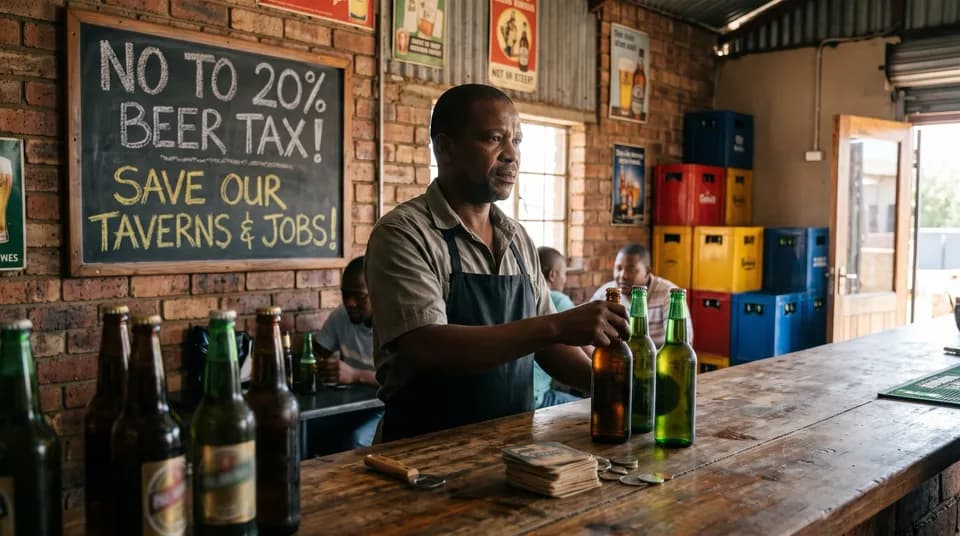
Treasury wants to tax beer by alcohol strength. For the lagers that fill South Africa’s bars and taverns, that means a 20% jump in the excise rate — and a fight over who ends up carrying the cost.
The price of a beer in South Africa could become the next battleground between government, brewers and an already pressured hospitality industry. National Treasury is consulting on an overhaul of the country’s beer excise structure. Instead of a single rate across the category, beer would be taxed in tiers according to alcohol strength.
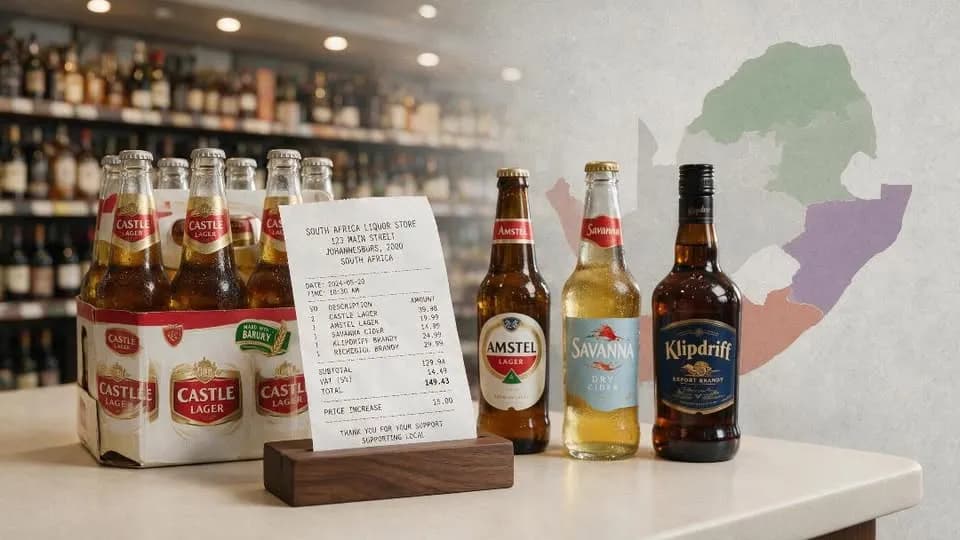
The dispute centers on a proposed middle tier for beers between 2.5% and 9% alcohol by volume (ABV), which would attract excise duty at 1.2 times the standard rate. That tier would capture the country’s mainstream brands, including Castle Lager, Carling Black Label, Hansa Pilsener and Castle Milk Stout. For these beers, the proposed excise rate would be 20% higher than the standard rate, before any subsequent annual inflation adjustment.
The question is no longer simply how much more a brewery might pay. It is how much of that increase eventually reaches the customer, and what happens to the businesses that depend on beer sales.
The proposal at a glance:
* Current rate: Malt beer was taxed at R145.07 per litre of absolute alcohol in 2025/26. The February 2026 Budget applied a 3.4% inflation adjustment, bringing the active 2026/27 rate to R149.98.
* Proposed change: Beers between 2.5% and 9% ABV would be taxed at 1.2 times the standard rate — approximately R179.98 per litre of absolute alcohol.
* Who is affected: Most mainstream lagers and stouts sold in South Africa.
* Status: Consultations have been extended through 2026. No final decision has been announced.
The figures below apply the hypothetical 1.2 multiplier to the active 2026/27 rate. They show the additional excise duty only, before any further inflation adjustment in February 2027.
Standard 5% ABV lager:
340 ml can 750 ml quart
Pure alcohol 17 ml 37.5 ml
Current excise R2.55 R5.62
Proposed excise R3.06 R6.75
Additional excise R0.51 R1.12
Additional cost including VAT R0.59 R1.29
Additional excise per case/crate R12.24 (24 cans) R13.50 (12 bottles)
Higher-strength 5.5% ABV lager
340 ml can 750 ml quart
Pure alcohol 18.7 ml 41.25 ml
Current excise R2.80 R6.19
Proposed excise R3.37 R7.43
Additional excise R0.56 R1.24
Additional cost including VAT R0.65 R1.43
Additional excise per case/crate R13.46 (24 cans) R14.85 (12 bottles)
These figures represent the additional statutory duty, not the final increase on the shelf. The actual selling price will depend on how manufacturers, distributors and retailers manage the extra cost and their own margins. South African Breweries (SAB), which holds approximately 70% of the country’s formal beer market by volume, has been the most vocal opponent. The company estimates the changes could cost more than R2 billion in sales.
SAB also warns that raising the price of legal beer could push price-sensitive consumers towards illicit alternatives. That market is already large: Euromonitor estimates the illicit alcohol market was worth approximately R25.1 billion in 2024, with almost one in five alcoholic drinks sold in South Africa coming from illegal sources. Rather than a structural overhaul, SAB has called for more predictable excise adjustments — annual increases linked to consumer inflation.
The Beer Association of South Africa (BASA) has focused on the wider economic consequences. The beer value chain supports approximately 210,000 direct and indirect jobs, reaching well beyond breweries into agriculture, packaging, distribution, retail and hospitality. The industry’s fear is that higher taxes would weaken the formal market and add pressure on businesses already dealing with rising operating costs.
The argument for reform is not without substance. Public-health advocates believe alcohol taxation should do more than raise revenue: it should encourage responsible drinking and give manufacturers a financial reason to produce lower-strength beverages. Alcohol’s health burden in South Africa is significant. The 2023 Global Burden of Disease estimates attribute approximately 3.7% of the country’s deaths to alcohol.
Yet researchers at the University of Cape Town’s Research Unit on the Economics of Excisable Products (REEP) argue that Treasury’s thresholds are too broad to change behaviour. More than 95% of beer sales by volume reportedly fall within the 4% to 6% ABV range. Under the proposed structure, almost all mainstream beers would sit in the same bracket, leaving brewers little incentive to make small reductions in alcohol strength.
REEP has modelled alternatives with narrower thresholds:
* Three tiers, with thresholds at 3.5% and 4.5% ABV: could cut the pure alcohol consumed through beer by approximately 14.3%.
* Four tiers, adding a 2.5% threshold: could raise that reduction to 15.7%.
These are modelled outcomes, not guaranteed results. Both depend heavily on whether brewers actually reformulate their products in response to the tax incentives. The debate, therefore, extends beyond the price of a beer. It is about how government balances economic activity, consumer behavior and the health consequences of drinking.
For bar and tavern operators, the proposal raises a different set of problems. Beer is one of the most important revenue generators for many hospitality businesses. Unlike premium spirits or speciality cocktails, mainstream lager depends on volume. Customers know what their favorite beer costs, and even small increases can change what they order.
A venue facing higher wholesale prices has two options. It can absorb the cost and accept a smaller gross profit or pass it on and risk losing customers who are already watching their household spending. Small taverns, independent bars and neighbourhood restaurants generally have less room to manoeuvre than larger hospitality groups.
There is another consideration that rarely features in excise discussions: the selling price of a beer is not just a number on a menu. It is part of the relationship between a venue and its regular customers. A tavern that increases the price of a familiar lager risks complaints from people who have been buying the same product there for years. A bar that absorbs the increase sacrifices margin on one of its most frequently sold products. Neither option is particularly comfortable, especially when rent, electricity, wages and supplier costs are already competing for the same revenue.
The pressure could also reach the people working behind the bar. If higher prices lead to lower sales, operators may have to rethink stock levels, staffing and other operating costs. The effect will differ from business to business, but it is unlikely to stop at the brewery gate.
The February 2026 Budget raised malt beer excise by 3.4% and extended consultations on structural reform through 2026. On 13 November 2026, BASA interim CEO Nirishi Trikamjee repeated the industry’s warning that the proposed structure could raise retail prices, weaken the formal market and make illicit products more attractive. Public-health researchers, meanwhile, continue to argue that a better-designed system could encourage lower-strength products and reduce alcohol-related harm.
No final policy decision has been announced, which makes the February 2027 Budget the key date for the brewing and hospitality industries. For South Africa’s bars and taverns, the worry is not simply another tax increase. It is the cumulative effect of rising costs on a business model that depends on customers walking through the door and ordering another round. The brewers may be leading the fight against Treasury’s proposal, but they will not be the only ones feeling the consequences.
End of story.

No comments yet. Start the conversation.