

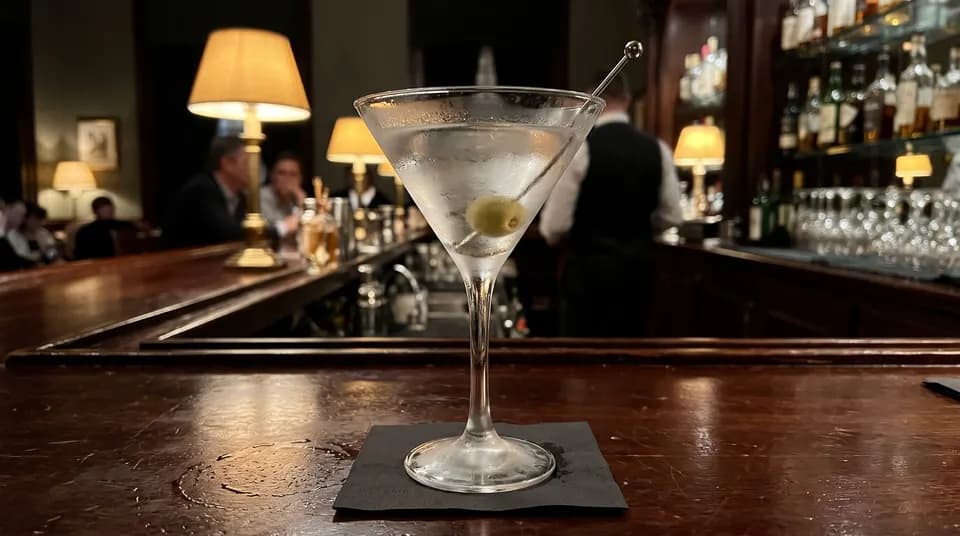
The Martini has only three ingredients: gin, dry vermouth, and the water that comes off the ice as you stir. With so little in the glass bad technique shows. A sour can hide a heavy pour behind lemon and sugar, but a Martini can't. Made well, it's very cold, perfectly clear, and smells of juniper and lemon oil. That's why bartenders still judge each other by it.
Nobody knows for sure where it came from. It almost certainly grew out of the Martinez, a sweeter drink that started showing up in bar guides in the 1880s. The Martinez used Old Tom gin (slightly sweetened), sweet red vermouth, a little maraschino liqueur and bitters. One story says Jerry Thomas made it at San Francisco's Occidental Hotel for a man travelling to Martinez, California. The town of Martinez says one of its own saloon keepers invented it during the Gold Rush. Others think the name just came from Martini & Rossi vermouth, which was everywhere in American bars at the time.
Around 1900, drinkers started wanting drier drinks. Bartenders swapped Old Tom for London Dry gin and sweet vermouth for French dry vermouth and they dropped the maraschino. Those early Dry Martinis used plenty of vermouth, often two parts gin to one, sometimes equal parts, with a dash of orange bitters. Over the next fifty years, people kept cutting the vermouth until it turned into a running joke: pour the gin and just look at the vermouth bottle.
Part of the problem was the vermouth itself. Bars kept opened bottles on warm shelves for months, and since vermouth is wine, it went sour. If you keep it in the fridge and finish it within a few weeks, it tastes fresh and herbal and works with the gin. Stir the drink rather than shaking it. Shaking adds air bubbles and ice chips, so the drink comes out cloudy and loses its smooth texture.
Recipe:
60 ml London Dry gin
15 ml dry French vermouth, kept in the fridge
1–2 dashes orange bitters
Large solid ice cubes
Lemon peel or a good green olive, to garnish
Method:
1. Put a Martini or Nick & Nora glass in the freezer for at least 15 minutes.
2. Add the gin, vermouth and bitters to a chilled mixing glass.
3. Fill it with ice and stir steadily for 25–30 seconds, until it's very cold and slightly diluted.
4. Strain into the frozen glass with a julep strainer.
5. Twist a strip of lemon peel over the drink so the oils spray onto the surface, then drop it in. Or skip the lemon and add one olive on a pick.
End of story.

No comments yet. Start the conversation.