

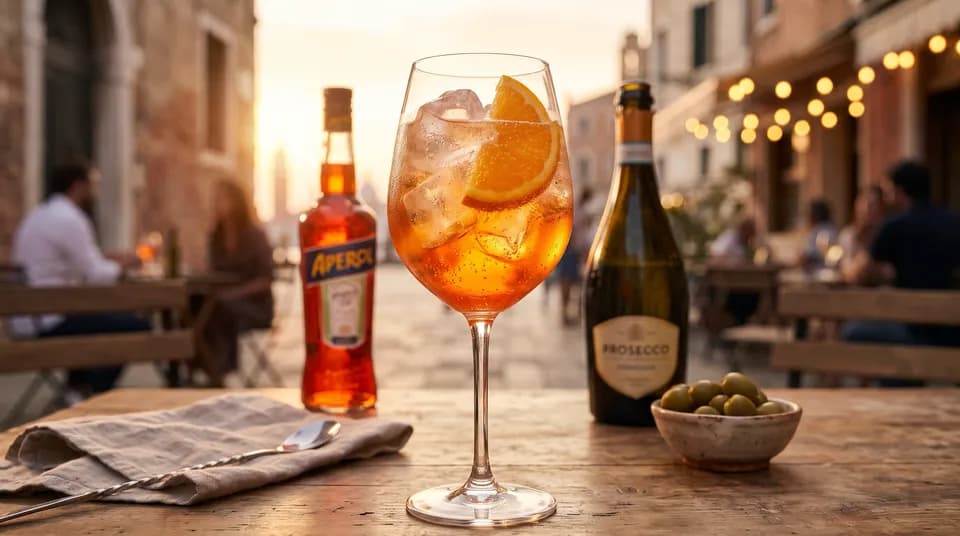
The Aperol Spritz is what Italians drink before dinner and these days so does everyone else. It’s bright orange, lightly bitter, low enough in alcohol that you can have one at five and still taste your food at eight. It’s so common on social media that it’s easy to forget the drink has a history and that history starts with people who wanted to make their wine a little lighter.
In the 1800s, the Veneto region of northern Italy was under Habsburg rule. Austrian soldiers, diplomats and merchants stationed there reportedly found the local wines too strong for their taste. They began asking tavern keepers to add a splash of water to dilute them. The German word spritzen, meaning to spray or splash, is widely credited with giving the drink its name. The exact origins are difficult to pin down, but this is the story most commonly associated with the birth of the spritz. For decades, it was a simple combination of white wine and sparkling water.
The orange part came later. In 1919, brothers Luigi and Silvio Barbieri launched Aperol at the Padua International Fair after seven years of working on the recipe. It’s made with bitter and sweet oranges, gentian root, rhubarb and cinchona. At its original strength of 11% ABV, it was marketed as a lighter aperitif for a generation looking for something less alcoholic.
Aperol gradually found its place across northern Italy, but it took until the 1950s for the modern Aperol Spritz to become established. Bartenders in Venice and Padua helped popularize the combination of Aperol, Prosecco and soda water. The ratio they settled on is still the standard: three parts Prosecco, two parts Aperol and one part soda.
Campari Group bought the brand in 2003 and put serious marketing money behind it, helping turn what was largely an Italian drinking habit into a global favorite. Made properly, it deserves the attention: fizzy, citrusy, with a bitter herbal finish. Made badly, with flat Prosecco or a glass of half-melted ice, it tastes like watered-down orange soda. The difference is mostly in the method.
Recipe:
90ml dry Prosecco, chilled
60ml Aperol
30ml soda water, chilled
Large, solid ice cubes
Fresh orange slice, to garnish
Method:
1. Fill a large, stemmed wine glass with ice. Big, solid cubes melt more slowly and keep the drink cold without watering it down too quickly.
2. Pour in the Prosecco first. This helps build the drink gently and keeps the carbonation intact.
3. Add the Aperol, pouring it slowly over the ice.
4. Top with the soda water.
5. Give it one gentle lift with a bar spoon to bring everything together without losing too much fizz. Tuck a half-wheel of orange into the ice and serve immediately.
End of story.
No comments yet. Start the conversation.