

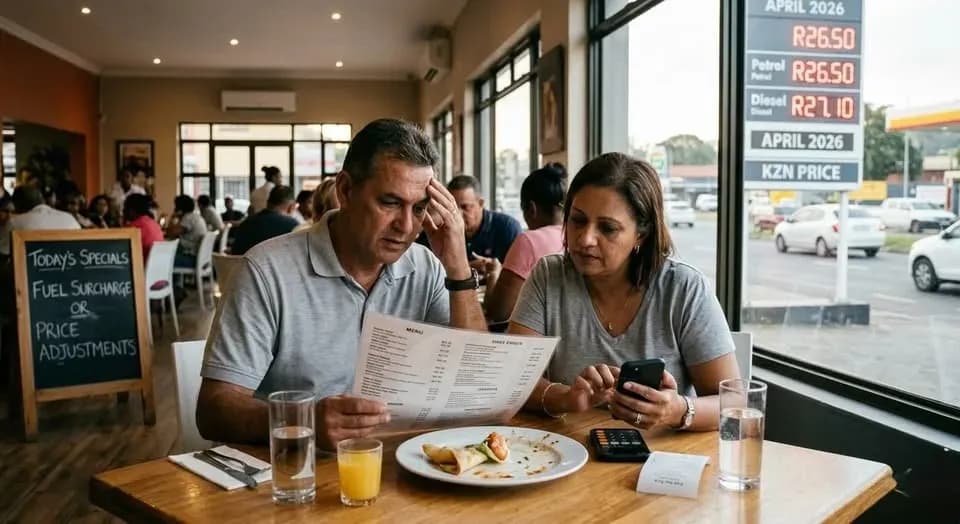
The rise in fuel prices in South Africa in April 2026 isn’t just another economic headline; it will hurt the hospitality industry directly. This isn’t pressure for an industry that is already working on thin margins; it’s suffocation. Fuel doesn’t just change how people get around; it also changes how bars, restaurants, and cafes work. And right now, that base is changing.
For years, the hospitality industry has been focused on keeping costs down by tightening food margins, managing staff schedules, cutting down on waste, and improving menus. But this moment has shown a harsh truth: the biggest costs are no longer inside the company. They are not in it. Over 80% of goods in South Africa are moved by road, so the sharp rise in diesel prices has made everything more expensive before it even gets to the kitchen. Suppliers aren’t negotiating; they’re making changes. Delivery fees are going up, fuel surcharges are becoming more common, and the minimum order amounts are going up. Restaurants have a few options other than to accept it.
This change is hurting margins right now. Restaurants cannot immediately increase their menu prices in response to rising supplier prices. There is doubt, there is resistance from customers, there is always the fear of losing guests. Instead, the operators absorb the cost. A meal that made money last is now breaking even. A bestseller can quietly transform into a significant issue. Margins on drinks go down. And these changes happen while menu prices stay pretty much the same until they change.
At the same time, behavior is changing. The rise in fuel prices is not only making operating costs go up, but it is lowering demand. People who stay with us are going out less often, when they do they spend less. There aren’t as many people going out to eat, especially during the week. Tables are ordering fewer things. High-margin options like cocktails and high-quality proteins are slowing down. People are increasingly sensitive to prices. This makes things very unbalanced: there are fewer customers, they spend less money per customer, and operating expenses go up, even though fixed costs like rent, electricity, and wages stay the same.
The most significant change is how people think about going out. Experience good food, service, and atmosphere have always been the reason people spend money on hospitality. But now there’s something else to think about and that is effort. It’s not just about whether the place is appealing anymore; it’s also about whether it’s worth the gas, the cost of getting there, and the planning. People are choosing to stay home if the experience doesn’t clearly outweigh the effort. This creates a new barrier in the market that most venues will struggle to overcome.
At the same time, ease of use is quietly becoming the industry’s biggest rival. Anything that makes things easier is a threat, not just other restaurants. More and more people are choosing food that is closer to home, quick-service models, grab and go ideas, delivery options. Even gas stations are becoming places to eat because they don’t require extra travel. In this setting, traditional sit-down restaurants, especially those that require a deliberate trip, are finding a hard time competing with quick-service models and delivery options that are easy to use and get to.
This is how closures start: not all at once, but slowly. It starts with fewer hours, smaller teams, and shorter menus. Then there is deferred maintenance, less consistency, worst experience for guests, which ultimately leads to decreased customer satisfaction and loyalty. Finally, businesses close their doors, not because the idea didn’t work, but because the numbers stopped making sense. The rise in fuel prices in April has not only raised costs; it has also changed the way the hospitality industry works. For hospitality to work, there has to be a simple balance: people have to be able to afford to go out, and businesses have to be able to afford to serve them. At this point, both sides of that equation are feeling the heat. When that balance is lost, the industry doesn’t change; it gets smaller.
End of story.

No comments yet. Start the conversation.