

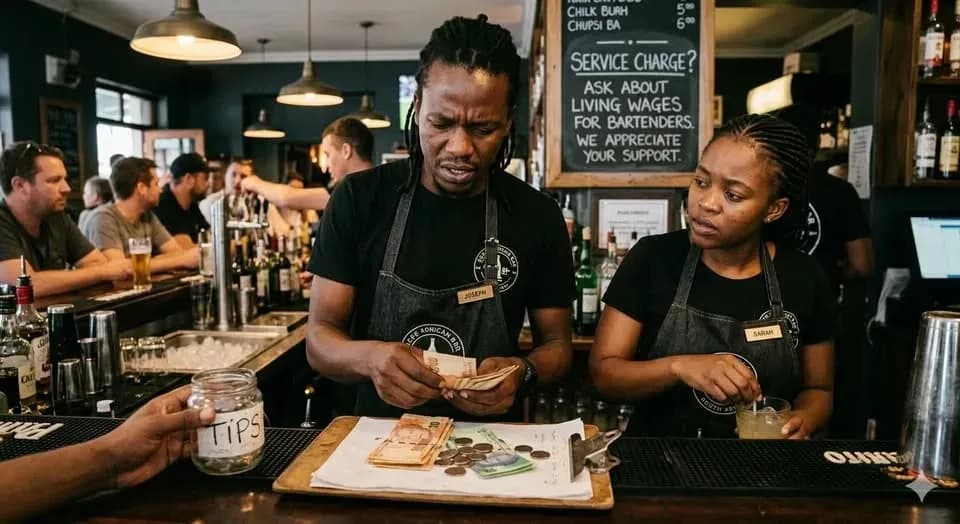
Spend a night at a good cocktail bar in Cape Town, Lagos or Nairobi and you’ll probably meet a bartender who knows their craft inside out. They can balance acidity and sweetness like a chef balances salt. They remember the drink which you had from the last time you visited. They can hold a conversation with strangers while shaking two cocktails at once.
It looks effortless but what most guests don’t see is the reality behind the bar once the lights go off and the tips are counted. Because, while Africa’s cocktail scene is growing fast, the pay behind the bar hasn’t kept up. And for many bartenders, the gap between the skill required and the money earned is getting harder to ignore. While the industry celebrates the rise of the mixologist, the financial reality for most bartenders tells a very different story, one where prestige has grown faster than pay.
In South Africa, bartending has become far more professional over the last decade. The modern bartender isn’t just pouring beer and rum anymore. They’re making house syrups, fermenting ingredients, clarifying juices and building menus that could sit comfortably in some of the world’s best cocktail bars. But the salaries often tell a different story. The national minimum wage currently sits around R30,23 per hour. For someone working a full 45 hour per week which works out roughly to R5,800 a month before tips.
Even experienced bartenders in cities like Johannesburg and Durban often earn somewhere between R12 000 and R15 000 a month. Only a small number working in high-end cocktail bars or luxury hotels break past R20 000 a month. That might sound reasonable until you factor in rent, transport, groceries and general cost of living in a major city. For many bartenders, the basic salary simply isn’t enough.
The industry loves to pretend that tips solve everything. In reality, tips are a fragile system that shifts the responsibility of paying workers from the business to the customer. When business is good, bartenders survive, when the economy tightens their income disappears almost overnight. No guests means no tips, which means a bartender can work a 12-hour shift while only a portion of that time actually generates income. The uncomfortable truth is that much of Africa’s cocktail culture has been built on cheap, passionate labor. And passion doesn’t pay rent, eventually the question won’t be whether bartenders are underpaid. The question will be why anyone talented enough to do the job still chooses to stay.
If Africa’s cocktail scene wants to keep growing, it needs to start asking harder questions about who actually benefits from that growth. At some point, the industry will have to decide whether bartending is truly a profession or just a passion that people are expected to sacrifice their livelihoods for. Because if nothing changes, the African continent may soon realize that the real cost of a cheap labor system isn’t just unfair wages. It’s the steady loss of the very talent that made Africa’s bar scene exciting in the first place.
End of story.



No comments yet. Start the conversation.